The National Weather Service’s Climate Prediction Center just released the winter forecast for the American Southwest.
And it’s looking like a warm and dry winter.
Not the sort of prediction we water harvesters want, especially during drought conditions, but here’s how I’m handling it at my place.
Transcript
INTRO: From Tucson, Arizona, welcome to the Water Harvesting 101 podcast. My name is Martha Retallick. I’ve been a water harvester for 20 years, and I’m looking forward to helping you get started.
Before we do that, here’s a little Tucson secret: For most of the year, we’re in drought. That’s just how life is in the desert.
But when the rains return, oh, do they ever. They often bring an unwelcome friend called flooding.
How do we reduce the risks of flooding? We do it with water harvesting.
Water harvesting encompasses three activities:
- Redirecting rainwater away from where it isn’t wanted to where it is.
- Storing rainwater for later use, for example, during a drought.
- Recycling “used” water. At my place, I don’t let laundry water go down the drain. Instead, it’s for the fruit trees.
We’ll be covering all of these topics and more, so let’s get started.
EPISODE: The Climate Prediction Center of the National Weather Service is out with its forecast for Arizona and the Southwestern region of the United States.
And, I’m sorry, it’s probably not going to be the forecast you want to hear: Warm temperatures and below average rainfall.
So much for that notion of coming out of that drought that we’ve been in – since the summer of 2024 – during the winter of 2025-26.
But as water harvesters, we deal with what is.
Back in Episode 30, I talked about being CEO of your own water company. How’s the CEO at this water company going to handle the relative lack of rain that we’re predicted to have this winter?
First of all, my cistern is full. Thank you, summer and fall rains, for that. I am going to be dedicating that water to my gardens.
I have 36 square feet of raised bed space all planted and spoken for right now. I also have a little container garden next to my gas meter. That’s all planted and spoken for, too. That’s where the cistern water is going.
Recently, I had three shrubs planted by Trees for Tucson, two desert hackberries and one Arizona rosewood. They’re going to be getting recycled water. I’m going to be taking showers for those shrubs.
And I really hate to admit this on the Water Harvesting 101 podcast, but I do this now and then: I take my watering can, I put it beneath the faucet, and I turn the water on.
Yes, I use city water to water shrubs and trees outside.
The reason I’m doing this is because those little shrubs that just came here, courtesy of Trees for Tucson, they need water to get established.
And the thing is, with one of the desert hackberries, as soon as it was planted, it turned into a little drama queen and dropped most of its leaves.
I did an online search to find out what the problem was, and it’s called transplant shock. They drop their leaves, and the solution is you just keep watering them until they come around again.
I already have two desert hackberries in this yard, and they have both done the drama queen thing, and the trick is to keep watering them. Eventually, they come back around.
My Arizona rosewood that was also planted by trees for Tucson. Darn if that shrub was not the least bit bothered by being planted here. It is acting like it was born to be here. I even think it’s growing a little bit, so I’m just going to keep on watering it.
Meanwhile, back in the cistern-watered garden front, I’ve got lettuce and greens to the point where, yes, it’s going to happen again. I’m going to be having lettuce and greens for breakfast, lunch, and dinner.
And that’s the nature of a fall-winter garden here in Tucson. They are very productive.
But, since we’re looking at above-average temperatures and below-average rainfall, that cistern water may start running down toward next summer, which leaves open the question of whether I’m going to have a garden here next summer.
This past summer, I had to pull everything out and let the garden lay fallow.
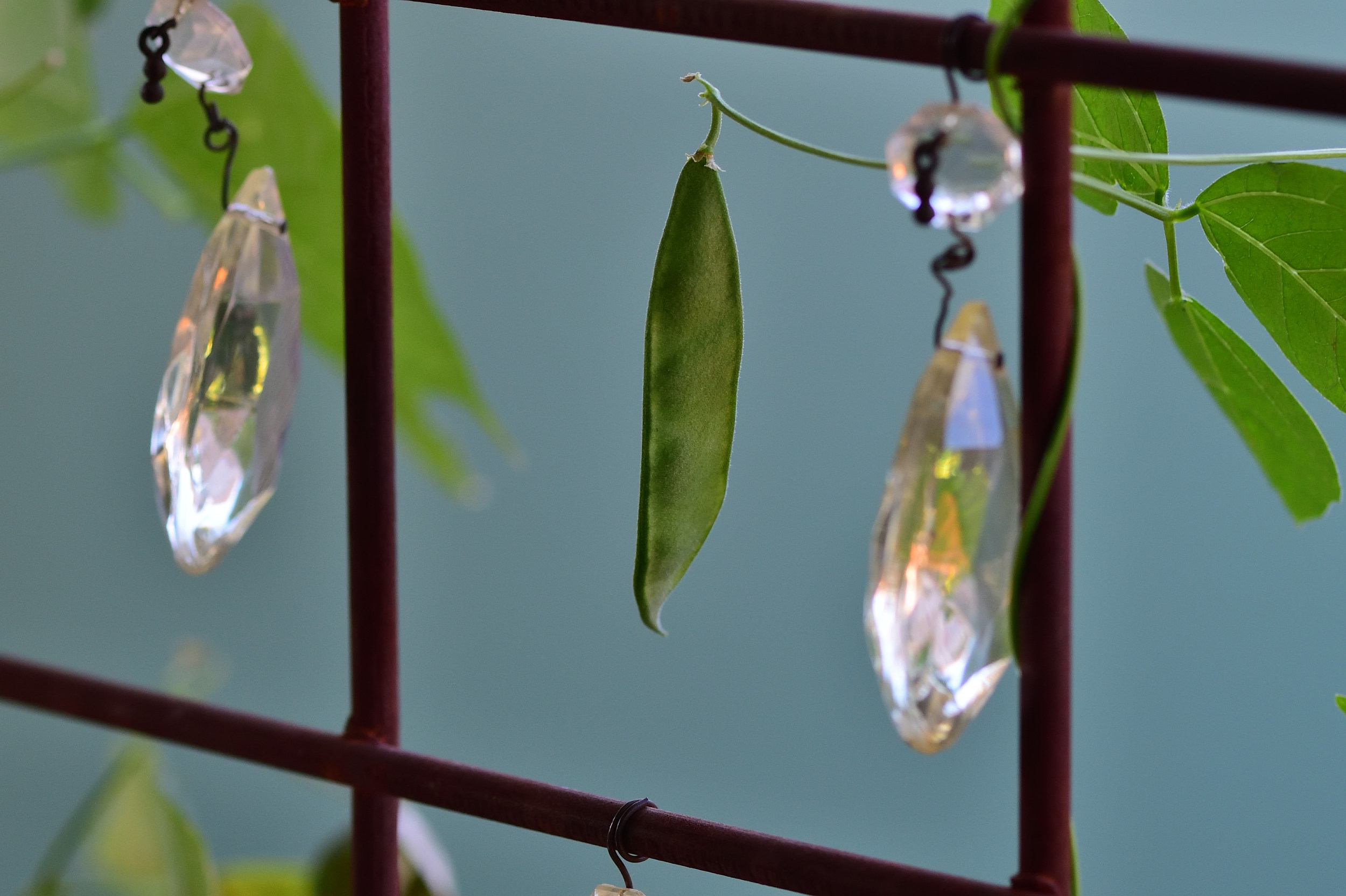
Then I planted tepary beans (shown above) and, darn it, those tepary beans are still producing.
It’s December now and I’m just going to let them keep going until they die off and then I’ll pull them out and put them in the compost bin.
And that’s a look at dealing with reality as it is with our long-term forecasts of above normal temperatures and below normal rainfall – that’s life in the water harvesting world.
If you’d like to learn more about water harvesting, sign up for my monthly email newsletter. If you do, I’ll give you a free copy of my Water Harvesting Cheat Sheet.
And if you’d like to support the Water Harvesting 101 podcast, the PayPal email address is info@westernskycommunications.com.
OUTRO: Thanks for listening to this episode of the Water Harvesting 101 podcast. If you’d like to learn more about water harvesting, meet my book family.
First, it’s City Nature, the book that’s guaranteed to look great on any coffee table. City Nature reveals my secrets to water harvesting through my 20-year journey of transforming my Tucson home into an urban oasis. Get the details at CityNatureBook.com.
And if you’re on the go, take water harvesting with you. Water Harvesting 101 is an audiobook and eBook combination that will teach you the nuts and bolts of water harvesting and show you how to put them to work. Available exclusively at WaterHarvesting101Book.com.