Many people think of the desert as a harsh environment where lushness is impossible without heavy irrigation. Here’s the thing about heavy irrigation: It leads to sky-high water bills. And those can really lighten your wallet. Fortunately, there are plenty of water-saving alternatives to heavy irrigation, and I discuss them in this episode.
Transcript
INTRO: From Tucson, Arizona, welcome to the Water Harvesting 101 podcast. My name is Martha Retallick. I’ve been a water harvester for 20 years, and I’m looking forward to helping you get started.
Before we do that, here’s a little Tucson secret: For most of the year, we’re in drought. That’s just how life is in the desert.
But when the rains return, oh, do they ever. They often bring an unwelcome friend called flooding.
How do we reduce the risks of flooding? We do it with water harvesting.
Water harvesting encompasses three activities:
- Redirecting rainwater away from where it isn’t wanted to where it is.
- Storing rainwater for later use, for example, during a drought.
- Recycling “used” water. At my place, I don’t let laundry water go down the drain. Instead, it’s for the fruit trees.
We’ll be covering all of these topics and more, so let’s get started.
EPISODE: Many people think of the desert as a harsh environment where lushness is impossible without heavy irrigation.
Here’s the thing about heavy irrigation: It leads to sky high water bills and those can really lighten your wallet.
And, lucky for me, I went into home ownership on a shoestring. That made the irrigation decision easy.
I simply couldn’t afford to install an irrigation system or run water through it. So what was this Pennsylvanian turned Arizonan to do?
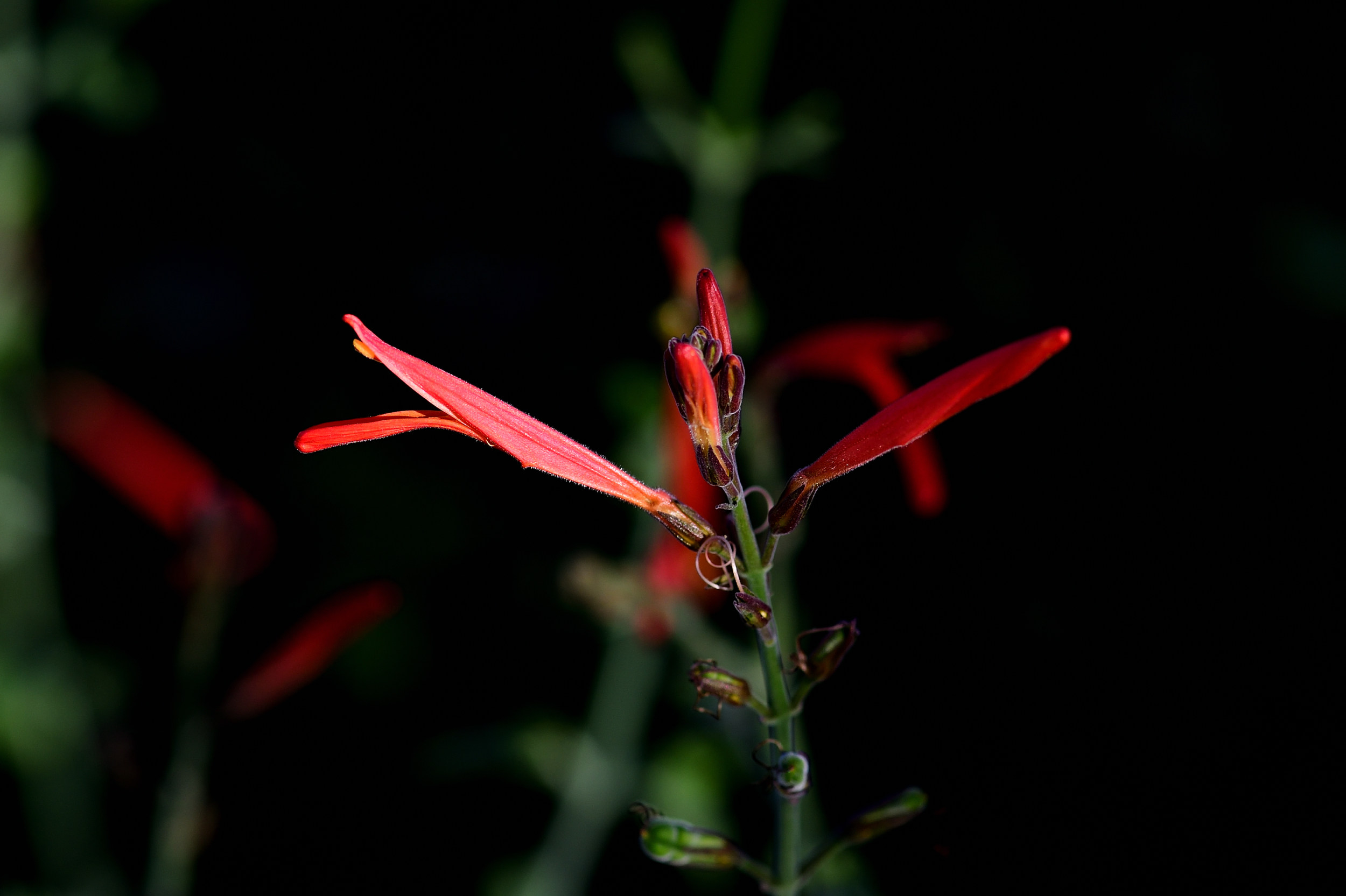
I made the most Pennsylvania decision ever: I decided to plant trees. My mesquite and ironwood trees and the shrubbery beneath (like the chuparosa shown above) are drought tolerant species. They can live off rainwater from that great watering can in the sky.
They also benefit from the passive water harvesting earthworks that I had installed. The berms, basins, and swales that keep water on my property instead of running out into the street and joining up with all that other water and causing trouble, i.e., floods.
And I’d also like to add that there is no lawn here. They take way too much water to establish and maintain, and that’s why you don’t see many lawns in Tucson.
Here is another thing about lawns in the American West: Water utilities have also noticed that those things drink a lot of water.
That’s why we’re starting to see in cities like Tucson, Phoenix, Las Vegas, and San Diego, rebates for ripping out the lawn – anywhere from say $2 a square foot to $5 a square feet. It’s a pretty good deal.
So, if you have a lawn and you’re thinking of replacing it with a more desert-friendly landscape, I would look into what the local water utility has in the way of rebates. It could add up to some serious money and help offset the cost of removing the lawn.
Here’s another thing about water in the West: Your water source is usually taken from a body of water which can be hundreds of miles away.
That’s how things work here in Tucson. We’re getting our water supply from the Colorado River, which is oversubscribed. So the incentive is on for us to become what is called more hydro-local, as in, let’s look to the rainwater.
Even in the desert, it does rain, so we need to become more conscious of when the rain falls. Let’s keep more of it here on properties, both commercial and private, to allow it to slow down, spread out and sink into the ground. And, on the way down to the water table, it’s going to encounter root systems of plants and nourish them.
That’s a look at massive irrigation, how it’s not a sustainable activity in the American Southwest, and here’s an opportunity to do things differently and live in a more hydro-local manner.
If you’d like to learn more about water harvesting, sign up for my monthly email newsletter. If you do, I’ll give you a free copy of my Water Harvesting Cheat Sheet.
And if you’d like to support the Water Harvesting 101 podcast, the PayPal email address is info@westernskycommunications.com.
OUTRO: Thanks for listening to this episode of the Water Harvesting 101 podcast. If you’d like to learn more about water harvesting, meet my book family.
First, it’s City Nature, the book that’s guaranteed to look great on any coffee table. City Nature reveals my secrets to water harvesting through my 20-year journey of transforming my Tucson home into an urban oasis. Get the details at CityNatureBook.com.
And if you’re on the go, take water harvesting with you. Water Harvesting 101 is an audiobook and eBook combination that will teach you the nuts and bolts of water harvesting and show you how to put them to work. Available exclusively at WaterHarvesting101Book.com.