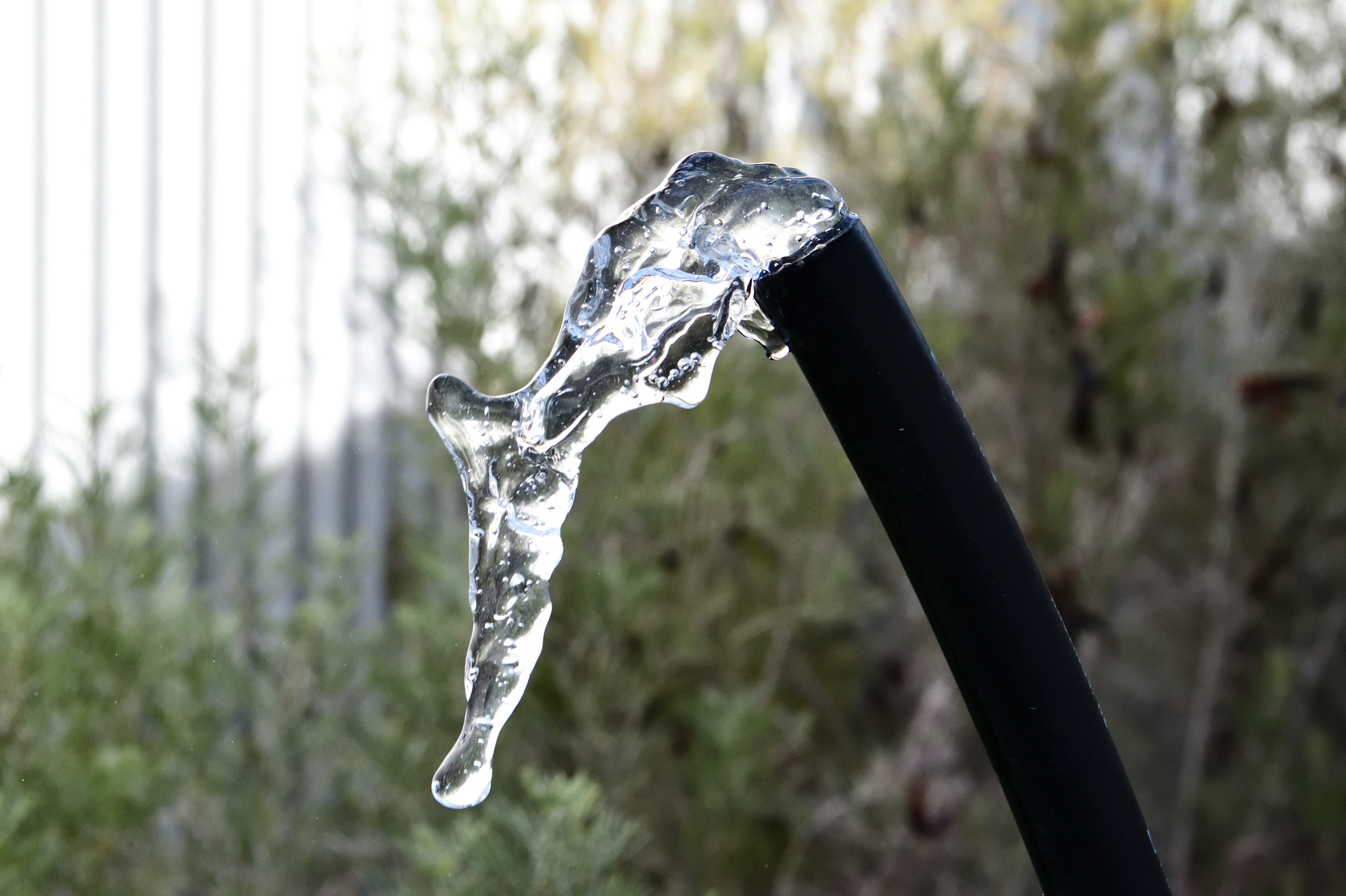
My laundry-to-landscape greywater harvesting system irrigates three fruit trees. This episode focuses on needed maintenance of this system and its six emitters, three of which are for my big pomegranate tree, two are for my small pomegranate, and one is for my Meyer lemon.
Transcript
INTRO: From Tucson, Arizona, welcome to the Water Harvesting 101 podcast. My name is Martha Retallick. I’ve been a water harvester for 20 years, and I’m looking forward to helping you get started.
Before we do that, here’s a little Tucson secret: For most of the year, we’re in drought. That’s just how life is in the desert.
But when the rains return, oh, do they ever. They often bring an unwelcome friend called flooding.
How do we reduce the risks of flooding? We do it with water harvesting.
Water harvesting encompasses three activities:
- Redirecting rainwater away from where it isn’t wanted to where it is.
- Storing rainwater for later use, for example, during a drought.
- Recycling “used” water. At my place, I don’t let laundry water go down the drain. Instead, it’s for the fruit trees.
We’ll be covering all of these topics and more, so let’s get started.
EPISODE: During this episode, I’m going to discuss the maintenance of a greywater harvesting system.
At my place, I have what’s called a laundry-to-landscape greywater harvesting system that diverts washing machine water from the county sewer system. Instead, it sends it out to the yard where it connects with underground irrigation lines that feed three fruit trees.
And, since it turns out, we’re having a rainy winter after all, I don’t need to irrigate the fruit trees right now. So, what are the maintenance tasks?
First task is to shut off all the emitters. I have a total of six of them.
Next, when I do laundry, I am letting the water run out through the greywater system’s overflow line, which is attached to a riser in my feathery senna shrubs. When the washing machine water drains out, it geysers out through this overflow line. (See above photo.)
I’m going to be doing this for a few weeks, and then, as the weather starts to warm up, I’m going to turn the emitters back to the “on” position. I’m not going to turn them all on at once because I want to test them one at a time to see how well they’re working.
So, it’ll be the two emitters on the small pomegranate tree that I planted a couple of years ago followed by the three emitters that irrigate my big pomegranate tree – it’s been at my place for almost nine years – and then, finally, the one emitter on the Meyer lemon.
The Meyer lemon is really producing the fruit this year.
I have tested the fruit by doing the tug test. You grasp a fruit and you tug on it, and if it doesn’t come off the tree, you leave it there. Let it grow more.
And, right now, I’m not finding any lemons that really want to come off the tree, I give them the tug test and they are just as determined to stay on the tree.
What would change this situation would be if we get a frost warning in the weather forecast.
When that happens, forget the tug test, I am going out there with my pruners and I’m just going to cut those lemons off the tree, bring them in the house.
And then, well, I’ll just have to figure out what to do with a bunch of lemons in my house during the wintertime. I think the forecast in the house may call for lemonade.
Also out in the garden, that little pomegranate tree that I mentioned earlier, last fall was a warm fall, the tree got confused, it started setting fruit! It has three pomegranates on it.
Even if we have a freeze warning, I’m just going to let them stay there because pomegranates aren’t normal in the fall. The tree doesn’t really start setting fruit until the late spring.
So, I’ll just let those three pomegranates stay there and do what they do – as in, grow riper and redder and provide numerous photo opportunities for Martha, especially during the rain. I love to photograph raindrops on plants. Look through my portfolio and my blog and you’ll see plenty of examples.
If you’d like to learn more about water harvesting, sign up for my monthly email newsletter. If you do, I’ll give you a free copy of my Water Harvesting Cheat Sheet.
And if you’d like to support the Water Harvesting 101 podcast, the PayPal email address is info@westernskycommunications.com.
OUTRO: Thanks for listening to this episode of the Water Harvesting 101 podcast. If you’d like to learn more about water harvesting, meet my book family.
First, it’s City Nature, the book that’s guaranteed to look great on any coffee table. City Nature reveals my secrets to water harvesting through my 20-year journey of transforming my Tucson home into an urban oasis. Get the details at CityNatureBook.com.
And if you’re on the go, take water harvesting with you. Water Harvesting 101 is an audiobook and eBook combination that will teach you the nuts and bolts of water harvesting and show you how to put them to work. Available exclusively at WaterHarvesting101Book.com.