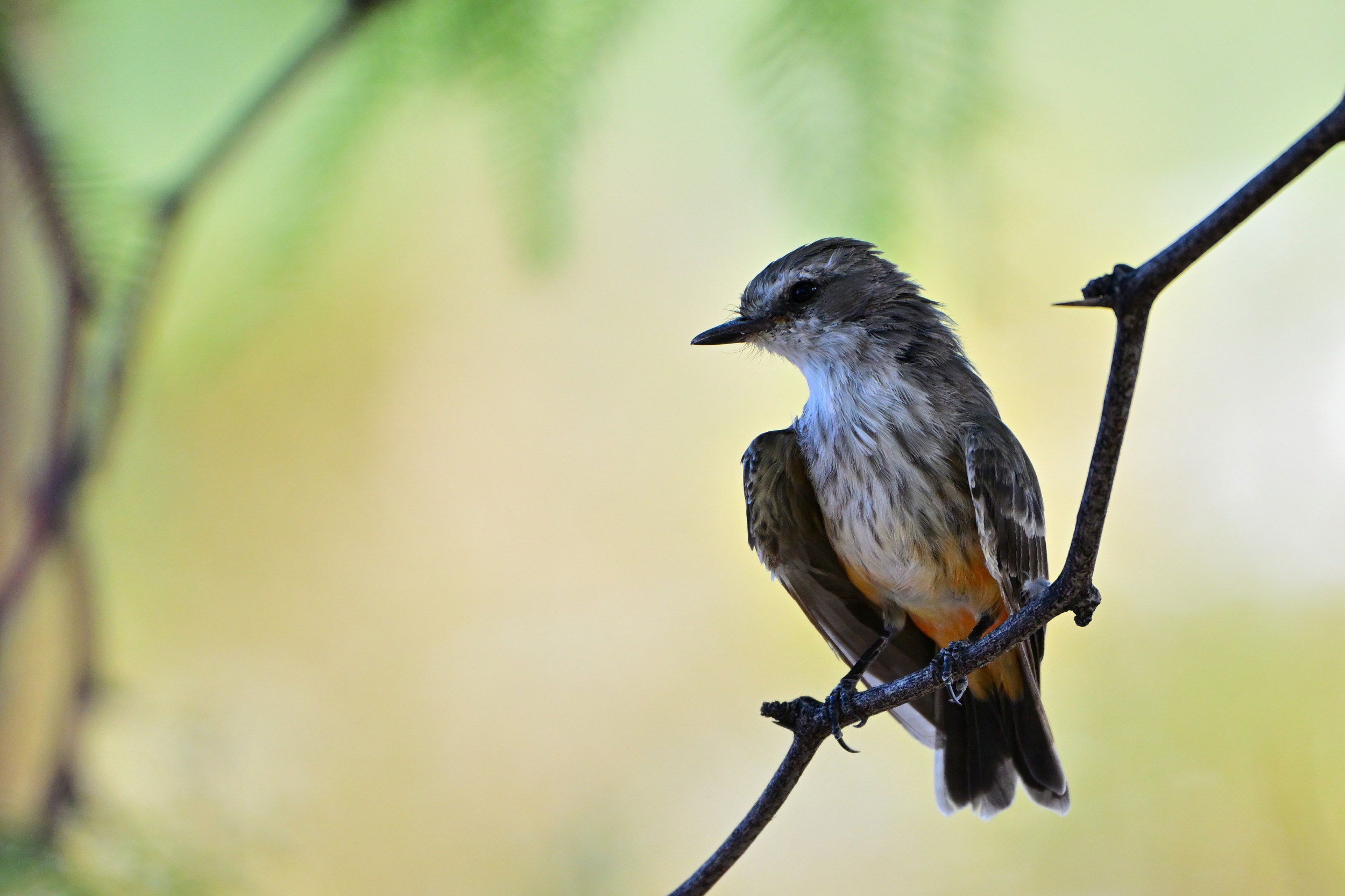
I’m pleased to report that my place is one of the busiest natural habitats in the neighborhood. In this episode, I’ll share how the local bird species utilize my rain-fed landscape for nourishment, socializing, and nesting.
Transcript
INTRO: From Tucson, Arizona, welcome to the Water Harvesting 101 podcast. My name is Martha Retallick. I’ve been a water harvester for 20 years, and I’m looking forward to helping you get started.
Before we do that, here’s a little Tucson secret: For most of the year, we’re in drought. That’s just how life is in the desert.
But when the rains return, oh, do they ever. They often bring an unwelcome friend called flooding.
How do we reduce the risks of flooding? We do it with water harvesting.
Water harvesting encompasses three activities:
- Redirecting rainwater away from where it isn’t wanted to where it is.
- Storing rainwater for later use, for example, during a drought.
- Recycling “used” water. At my place, I don’t let laundry water go down the drain. Instead, it’s for the fruit trees.
We’ll be covering all of these topics and more, so let’s get started.
EPISODE: This episode is brought to you by a twig.
Specifically, the twig is in the nesting shelf that’s attached to the back of my house.
I had this nesting shelf installed in order to create a welcoming place for birds to nest. Specifically, doves.
They’re shelf nesters. This means that doves like to nest on a flat surface, and they used to nest on the top of my solar electric box.
But I’m sorry, doves, you made too big of a mess. So, I had to put bird spikes on the top of that box. Now you have the nesting shelf.
The twig means that some dove couple has expressed an interest in building a nest there. It doesn’t mean that they actually will.
When it comes to nesting spots, this neighborhood offers a lot of choices. So that dove couple may or may not come back.
Getting into the larger theme of this episode, it’s about creating a wildlife habitat that largely lives off of rainfall. I’m talking about my trees, my shrubs, and so forth.
In my front yard, I have two ironwoods that have proven to be wonderful nesting trees since I planted them 20 years ago.
Lately, I’ve been seeing birds in the ironwoods. Let’s say they’ve been checking the trees out and checking each other out. I will leave the details of that to your imagination because this is a family-friendly podcast.
In addition to the trees, I also have shrubs, and some of those shrubs, most notably the desert hackberries, provide bird food.
I’ve seen all sorts of birds feasting on the desert hackberries outside my studio window.
Occasionally I have been fortunate enough to get photos of them, but they tend to be very fast and flighty birds like the vermilion flycatcher shown above. So, it’s kind of a photographic challenge.
I also have chuparosa, which produces red flowers, and the hummingbirds absolutely love them.
If you’re up for a photographic challenge, let me tell you, hummingbirds.
They’re fast, they flap their wings at, I’d say supersonic speed, and they don’t like each other. So. if you see two hummingbirds trying to feed from the same shrub, you are going to see some arguments.
I’ve also had roadrunners. They come into my yard, not because they’re interested in the trees and the shrubs. Instead, they’re interested in grubs, and they like to dig them out of the ground.
That ground is full of mulch – it creates a great habitat for grubs and other bugs, which feed birds like the roadrunners. I’ve also seen doves out in my yard, feasting on the insect life.
There are several couples doing that right now. Some of them may nest here, some of them may go elsewhere. Nesting is a bird-driven enterprise.
Even though I have a nesting shelf, it doesn’t mean they’re going to use it. It’s up to them.
If you’d like to learn more about water harvesting, sign up for my monthly email newsletter. If you do, I’ll give you a free copy of my Water Harvesting Cheat Sheet.
And if you’d like to support the Water Harvesting 101 podcast, the PayPal email address is info@westernskycommunications.com.
OUTRO: Thanks for listening to this episode of the Water Harvesting 101 podcast. If you’d like to learn more about water harvesting, meet my book family.
First, it’s City Nature, the book that’s guaranteed to look great on any coffee table. City Nature reveals my secrets to water harvesting through my 20-year journey of transforming my Tucson home into an urban oasis. Get the details at CityNatureBook.com.
And if you’re on the go, take water harvesting with you. Water Harvesting 101 is an audiobook and eBook combination that will teach you the nuts and bolts of water harvesting and show you how to put them to work. Available exclusively at WaterHarvesting101Book.com.