At my place, nearly all of my attempts to plant wildflower seeds have failed.
The simple truth is, Arizona wildflowers are persnickety about where they wish to set up shop. Being planted here is obviously not to their liking.
Then came the brittlebush.
Shortly after I moved in, I was told that brittlebush just wouldn’t grow in this neighborhood. That really disappointed me, because I really wanted to plant some.
A few years ago, I spotted a volunteer seedling in the front yard.
A brittlebush! It simply seeded itself!
That’s what we call a volunteer plant, and volunteers are the stars of this episode.
Transcript
INTRO: From Tucson, Arizona, welcome to the Water Harvesting 101 podcast. My name is Martha Retallick. I’ve been a water harvester for 20 years, and I’m looking forward to helping you get started.
Before we do that, here’s a little Tucson secret: For most of the year, we’re in drought. That’s just how life is in the desert.
But when the rains return, oh, do they ever. They often bring an unwelcome friend called flooding.
How do we reduce the risks of flooding? We do it with water harvesting.
Water harvesting encompasses three activities:
- Redirecting rainwater away from where it isn’t wanted to where it is.
- Storing rainwater for later use, for example, during a drought.
- Recycling “used” water. At my place, I don’t let laundry water go down the drain. Instead, it’s for the fruit trees.
We’ll be covering all of these topics and more, so let’s get started.
EPISODE: In this episode, I’m going to be talking about volunteers. I’m not referring to the human volunteers, but I will cover that in a later episode.
I am going to be talking about volunteer plants, the ones that just show up in your yard.
As water harvesters, we like volunteers because they’re pretty tough plants, native plants in most cases, and that’s good.
They know how to survive without much – or any – interaction from humans.
Volunteers don’t need us coming around with watering cans. And they probably don’t need us to trim them unless they happen to be doing something annoying, like growing in the roadway, which they often do in Tucson.
We have volunteer mesquites and other native trees – like the palo verdes and the ironwoods – that sprout between the edge of the street and the curb. And those things are a pain in the you-know-what to remove.
Instead, I’m going to be talking about volunteer wildflowers.
As mentioned above, I flunked wildflower seed planting. But a volunteer brittlebush decided that my place would be a perfect home.
I have no idea how it got here, but the important thing is that it’s here now.
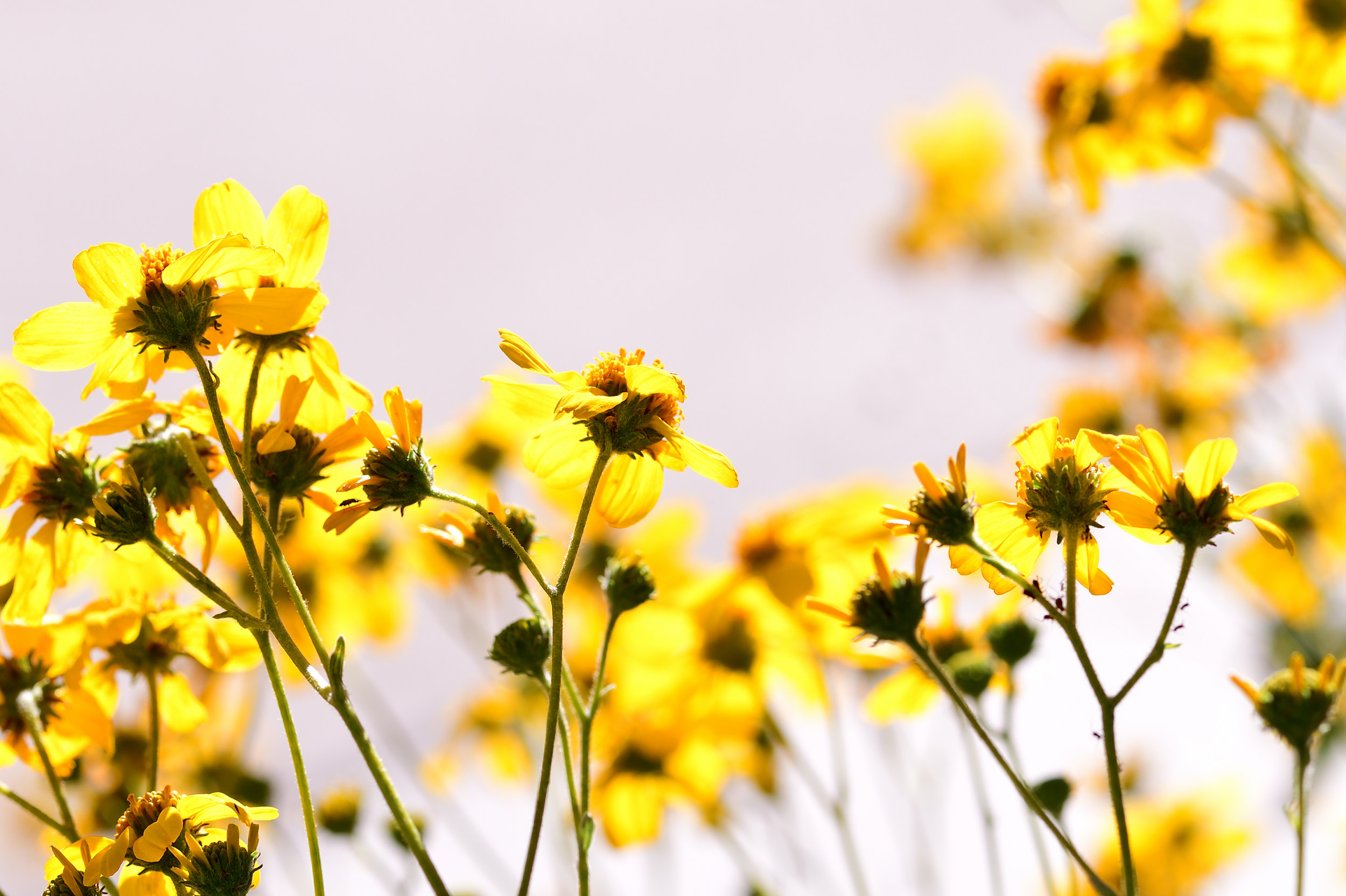
In the springtime, brittlebush is a real show-off with bright yellow flowers.
It’s a real photo op for Martha. And yes, you better believe it, I take full advantage of it. (See above photo.)
After the brittlebush loses its flowers, I’m not going to lie, it looks pretty boring.
And, as the weather heats up, brittlebush goes into dormancy. Translation for that term: It looks like it’s dead.
That’s just the nature of Arizona native plants. They go into dormancy and it’s easy to just give up on them, pull them out by the roots, and plant something else! Because I am done with brittle bush!
Don’t do that.
Just wait for the rains to return. You’re going to see that brittle bush leafing out again, growing, and then come next spring, you’re going to be treated to another yellow riot.
So, that’s a little bit about volunteers. These are the plants that just show up – and they can fend for themselves.
If you’d like to learn more about water harvesting, sign up for my monthly email newsletter. If you do, I’ll give you a free copy of my Water Harvesting Cheat Sheet.
And if you’d like to support the Water Harvesting 101 podcast, the PayPal email address is info@westernskycommunications.com.
OUTRO: Thanks for listening to this episode of the Water Harvesting 101 podcast. If you’d like to learn more about water harvesting, meet my book family.
First, it’s City Nature, the book that’s guaranteed to look great on any coffee table. City Nature reveals my secrets to water harvesting through my 20-year journey of transforming my Tucson home into an urban oasis. Get the details at CityNatureBook.com.
And if you’re on the go, take water harvesting with you. Water Harvesting 101 is an audiobook and eBook combination that will teach you the nuts and bolts of water harvesting and show you how to put them to work. Available exclusively at WaterHarvesting101Book.com.