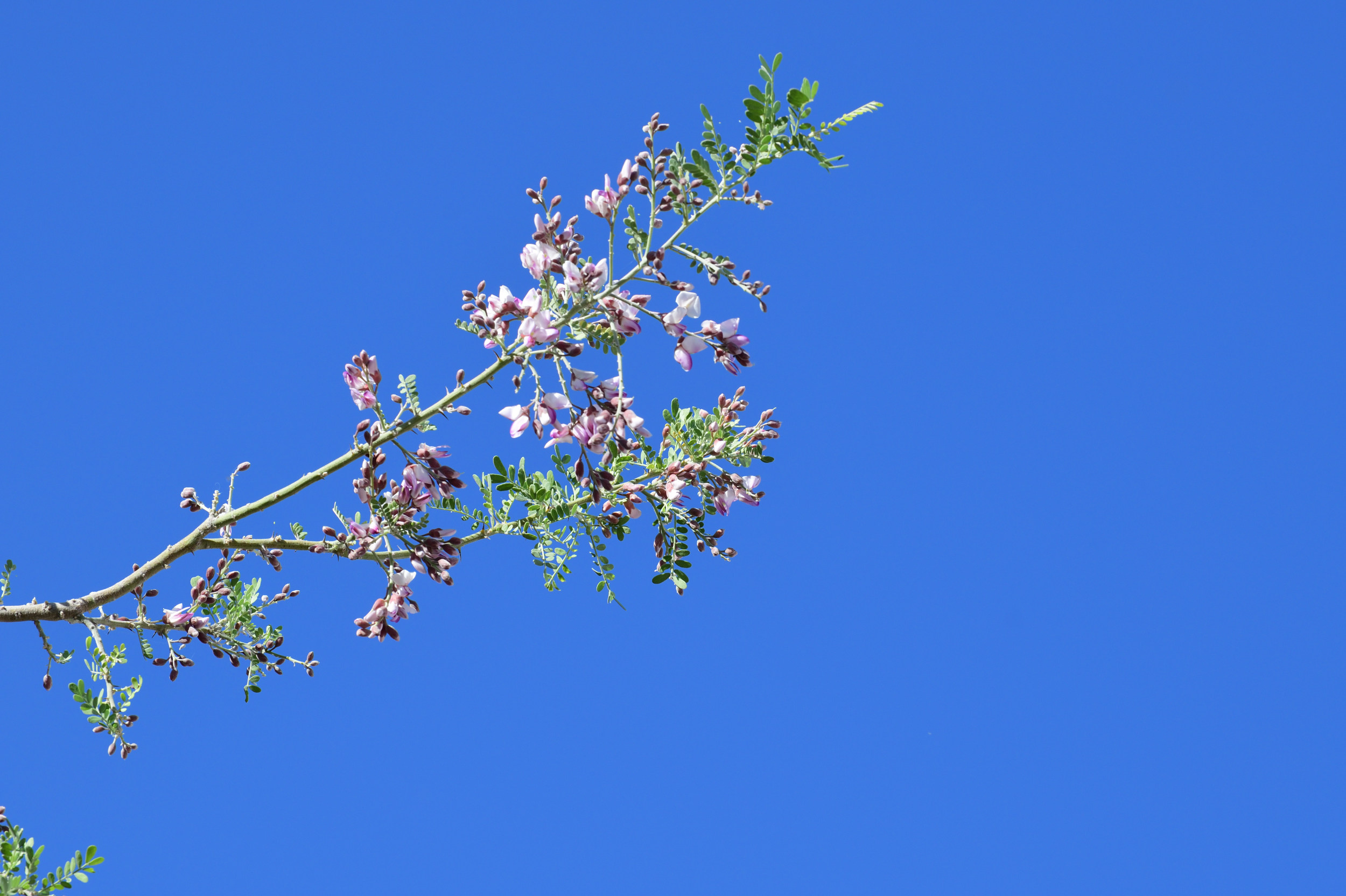
Springtime in the desert means that the flowers are blooming – for a very short time.
Then the flowers fall off their trees and shrubs. This can create a lot of work for humans who’d rather not have all of that litter all over the driveway–and other places.
However, that litter can also serve as mulch. Even better, it’s free mulch!
In this episode, I’ll tell you how to take advantage of that free mulch from above.
Transcript
INTRO: From Tucson, Arizona, welcome to the Water Harvesting 101 podcast. My name is Martha Retallick. I’ve been a water harvester for 20 years, and I’m looking forward to helping you get started.
Before we do that, here’s a little Tucson secret: For most of the year, we’re in drought. That’s just how life is in the desert.
But when the rains return, oh, do they ever. They often bring an unwelcome friend called flooding.
How do we reduce the risks of flooding? We do it with water harvesting.
Water harvesting encompasses three activities:
- Redirecting rainwater away from where it isn’t wanted to where it is.
- Storing rainwater for later use, for example, during a drought.
- Recycling “used” water. At my place, I don’t let laundry water go down the drain. Instead, it’s for the fruit trees.
We’ll be covering all of these topics and more, so let’s get started.
EPISODE: It’s that time of the year again! What time of the year is it?
It’s time to sweep the driveway! More than once a week, in fact.
And what is causing all of this work? Actually, there are two culprits. They are my front yard ironwood trees.
They are dropping leaves like crazy – all over the driveway.
What am I doing with these leaves after I sweep them up? I throw them into the yard where they can become mulch.
This is a lot of work, but here’s the reward: The next item on the ironwood tree checklist is flowering. I’m already seeing some flowering at the top of my trees.
The ironwoods produce these beautiful pink and purple flowers. (See above photo.)
And those flowers don’t last forever. Soon, they’ll be falling off the trees, and some of them will fall on the driveway.
Yes, I’ll be out there with the broom again, sweeping them up and throwing them into the yard where they can serve as mulch.
I recently did a podcast on mulch and I talked about where you can buy mulch if you need it. This is especially useful if you’re starting a water harvesting project.
But once you get your trees and your shrubs established, they will give you plenty of mulch for free. We’re talking about the organic mulch, the mulch that comes from carbon-based life forms.
Here’s why we like mulch so much: It acts as a braking system for rainfall. After a lengthy dry season, our soil here can get hydrophobic. This means that it can’t absorb water, and the rain will pool on the surface and become runoff.
When raindrops hit mulch, the mulch will cause it to go this way and that way as it gradually sinks into the ground. Eventually, those raindrops will reach the water table.
We also like mulch because it acts like a blanket or a carpet. Think of the last time you had your carpets cleaned. Remember the first day when that carpet was still very wet?
And the second day, what? It’s still not dry?
By the third day, you can finally walk on the carpets – without needing those little booties. At last! Your carpeting is dry!
Mulch does the same thing. It takes a while to dry out, and that gives the rainwater time to soak into the ground.
And that is why we like mulch.
We also like flowers. In addition to the ironwood trees, I have quite a few flowering shrubs. For example, my backyard feathery senna shrubs.
The sennas have dropped their flowers, so I have more mulch back there. I didn’t have to do anything. It just fell on the ground and it’s going to gradually decompose and enrich the soil.
And I like that. Work I don’t have to do.
It’s mulch that’s provided for me for free by Mother Nature, the greatest lady ever.
If you’d like to learn more about water harvesting, sign up for my monthly email newsletter. If you do, I’ll give you a free copy of my Water Harvesting Cheat Sheet.
And if you’d like to support the Water Harvesting 101 podcast, the PayPal email address is info@westernskycommunications.com.
OUTRO: Thanks for listening to this episode of the Water Harvesting 101 podcast. If you’d like to learn more about water harvesting, meet my book family.
First, it’s City Nature, the book that’s guaranteed to look great on any coffee table. City Nature reveals my secrets to water harvesting through my 20-year journey of transforming my Tucson home into an urban oasis. Get the details at CityNatureBook.com.
And if you’re on the go, take water harvesting with you. Water Harvesting 101 is an audiobook and eBook combination that will teach you the nuts and bolts of water harvesting and show you how to put them to work. Available exclusively at WaterHarvesting101Book.com.