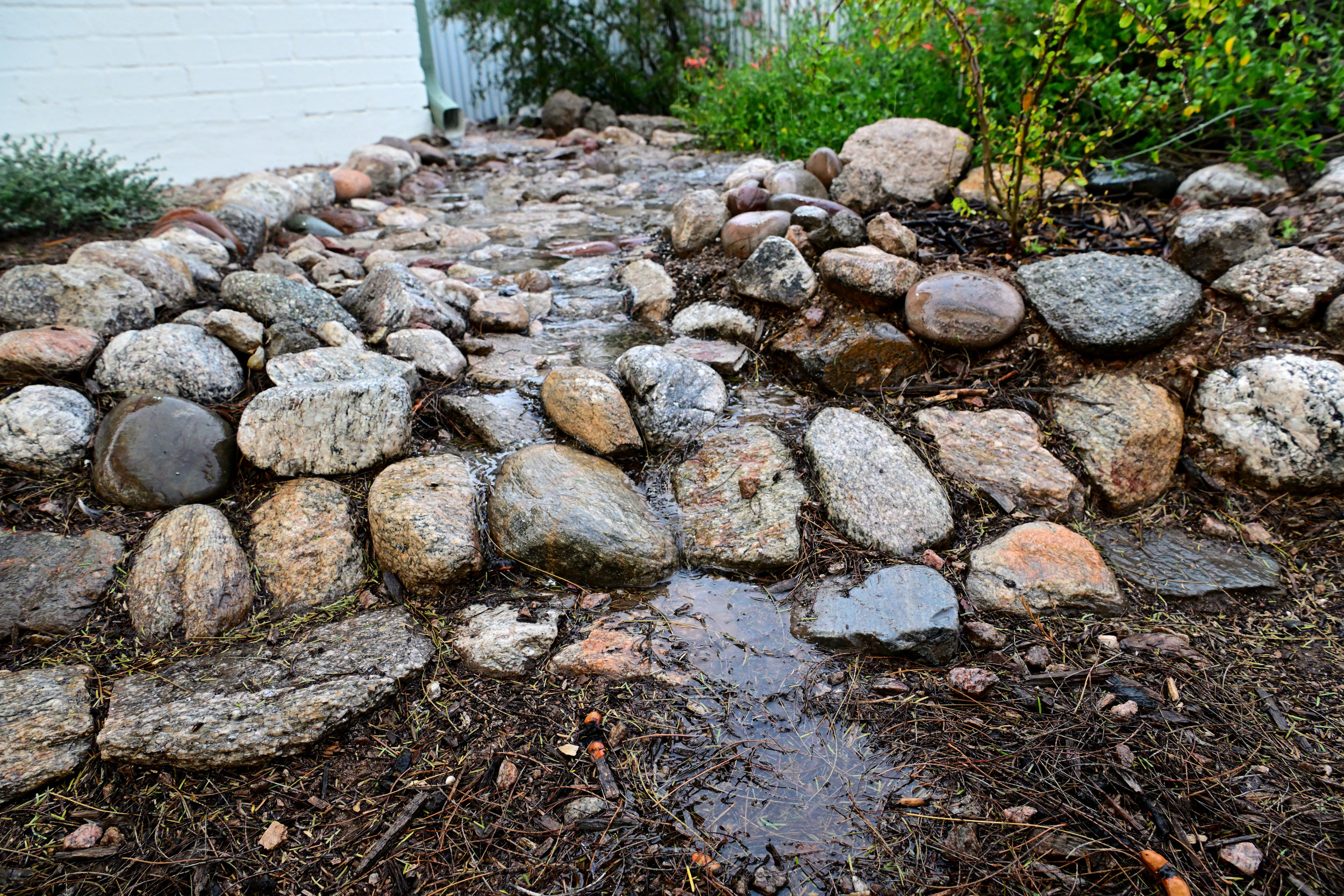
Quite often, water harvesting is associated with cisterns. And cisterns are expensive.
So, if you can’t afford a cistern, what can you do? Quite a bit!
This episode advises you to focus your efforts on passive water harvesting, with a bit of “used” water recycling thrown in for good measure.
Transcript
INTRO: From Tucson, Arizona, welcome to the Water Harvesting 101 podcast. My name is Martha Retallick. I’ve been a water harvester for 20 years, and I’m looking forward to helping you get started.
Before we do that, here’s a little Tucson secret: For most of the year, we’re in drought. That’s just how life is in the desert.
But when the rains return, oh, do they ever. They often bring an unwelcome friend called flooding.
How do we reduce the risks of flooding? We do it with water harvesting.
Water harvesting encompasses three activities:
- Redirecting rainwater away from where it isn’t wanted to where it is.
- Storing rainwater for later use, for example, during a drought.
- Recycling “used” water. At my place, I don’t let laundry water go down the drain. Instead, it’s for the fruit trees.
We’ll be covering all of these topics and more, so let’s get started.
EPISODE: Quite often, people equate water harvesting with cisterns, and those things can cost serious money. As in, thousands of dollars for purchasing and installation. (Don’t ask me how I know that.)
But, take it from someone who went 16 years before I was even able to afford a cistern, you can do water harvesting on the cheap.
Here’s what to do: Focus your efforts on building passive water harvesting earthworks, basins, berms, and swales. (See above photo for earthworks at work.)
And bonus points if you build those earthworks before you plant anything. In water harvesting parlance, this is called planting the rain first.
Here’s a bit of good news: You can create these basins, berms, and swales with tools you already own. I’m talking shovels and pickaxes.
If you live in the Southwest, I would recommend that you dig after a rainstorm. This will make the soil a lot easier to deal with.
Hate to say it, but during our dry spells, the soil resembles a rock rather than soil. So, pro tip, keep that in mind.
This comes from someone who has learned this lesson the hard way. A few years ago, I tried to dig a garden basin during a dry spell and, my goodness, it was like beating into concrete. I had such a backache and muscle aches all over my body.
I had a second basin to dig – and that one I dug after a big rainstorm. That basin is still on my property. These days, it’s where my Meyer lemon lives.
As mentioned in previous podcasts, that Meyer lemon is irrigated by a laundry to landscape greywater harvesting system that’s connected to my washing machine.
And, speaking of things that cost a lot of money, it was 13 years before I could afford to have that work done. I had to hire a plumber and get some very customized plumbing done.
But, nowadays, I don’t send the washing machine water down the drain. It irrigates three fruit trees.
The good news about recycling used water is you can do it very easily. For example, wash the dishes with the Oasis soap, carry the water out to the plants, and splash! They get a drink.
And how about taking a shower for a plant? I do this by putting a bucket beneath the tub spout, running the water, mixing it up ju-u-ust right, and when I have it ju-u-ust right, I take my shower.
After I’m dressed and refreshed, I take that water bucket out to water a plant.
So, takeaway from today is you can indeed do water harvesting on the cheap.
The good news about not having money is it forces you to think about creative solutions that you can do yourself with what you have on hand.
And that is a very good skill to develop at any age.
If you’d like to learn more about water harvesting, sign up for my monthly email newsletter. If you do, I’ll give you a free copy of my Water Harvesting Cheat Sheet.
And if you’d like to support the Water Harvesting 101 podcast, the PayPal email address is info@westernskycommunications.com.
OUTRO: Thanks for listening to this episode of the Water Harvesting 101 podcast. If you’d like to learn more about water harvesting, meet my book family.
First, it’s City Nature, the book that’s guaranteed to look great on any coffee table. City Nature reveals my secrets to water harvesting through my 20-year journey of transforming my Tucson home into an urban oasis. Get the details at CityNatureBook.com.
And if you’re on the go, take water harvesting with you. Water Harvesting 101 is an audiobook and eBook combination that will teach you the nuts and bolts of water harvesting and show you how to put them to work. Available exclusively at WaterHarvesting101Book.com.