It’s early summer, which means that it’s crunch time in Tucson.
The crunch comes from the sound of fallen mesquite and ironwood tree pods underfoot. They’re all over town – and maybe in your yard as well.
What can we do with these pods? I’ll give you the details in this episode.
Transcript
INTRO: From Tucson, Arizona, welcome to the Water Harvesting 101 podcast. My name is Martha Retallick. I’ve been a water harvester for 20 years, and I’m looking forward to helping you get started.
Before we do that, here’s a little Tucson secret: For most of the year, we’re in drought. That’s just how life is in the desert.
But when the rains return, oh, do they ever. They often bring an unwelcome friend called flooding.
How do we reduce the risks of flooding? We do it with water harvesting.
Water harvesting encompasses three activities:
- Redirecting rainwater away from where it isn’t wanted to where it is.
- Storing rainwater for later use, for example, during a drought.
- Recycling “used” water. At my place, I don’t let laundry water go down the drain. Instead, it’s for the fruit trees.
We’ll be covering all of these topics and more, so let’s get started.
EPISODE: Welcome to crunch time!
If you’re in Tucson, it’s that time of the year again.
It’s the time of the year when the mesquite and the ironwood pods fall off the trees.
And, if you’re walking around town or even walking on your own property, you are going crunch-crunch with your feet as your feet discover those pods.
During previous years, I have been picking up these pods and drying them out. I’m doing this so I can make things like the cookies I describe in my City Nature book.
This year, I’m letting the pods stay on the ground, and here’s why:
Back on June 17, we had a record-breaking rainstorm, .64” in one day. Right before that storm rolled into town, I did manage to pick up a few mesquite pods.
I got enough pods to fill a one-quart yogurt cup and I am drying them in the tool shed. That quart cup is up on a high shelf with the paint cans.
Maybe this year, maybe next year, I will grind that into flour and I might be fortunate enough to make a single cookie.
After that June 17 storm, the weather stayed humid for several days. That could have created the conditions for mold to form in the mesquite bean pods.
And, once that mold forms, and after those pods start falling to the ground, as they are now, they could be contaminated with aflatoxin. You don’t want that. Aflatoxin is a known carcinogen.
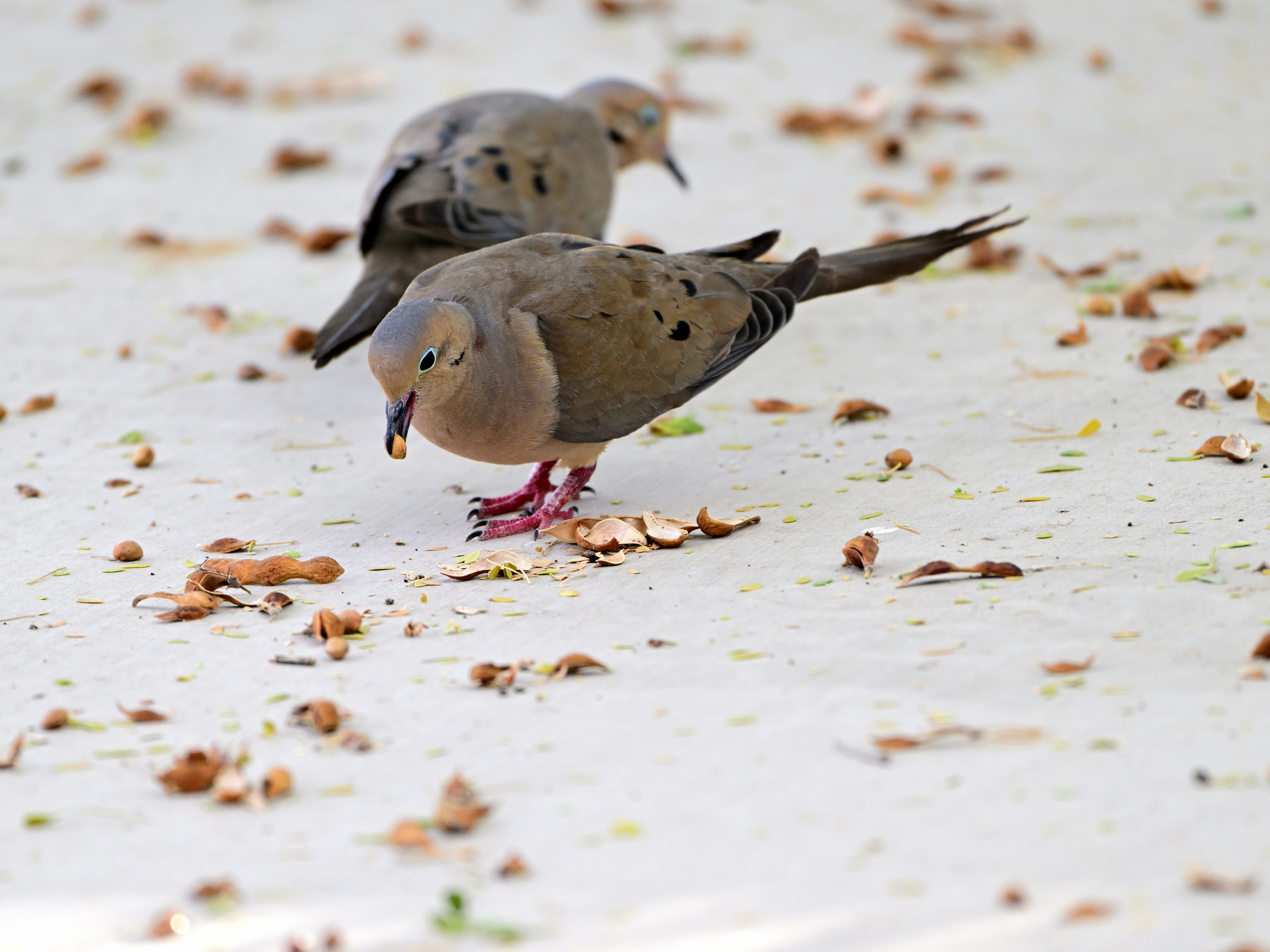
So, rather than grinding those mesquite pods into flour, I’m just letting them go. I’m letting the birds enjoy my pods.
They’re not so interested in the mesquite pods right now, but they really like the ironwoods (see above photo).
And I figure, with all the bird photography I do, it’s time for me to let the birds have those pods. It’s a little way of saying thank you for all of those photos that you birds have allowed me to take.
And here’s another thing I’m doing with them. I’m sweeping them up and throwing the piles in areas where I already have two ironwood trees growing and in a third area where I have ironwood seedlings becoming trees. It’s kind of like Martha’s tiny tree farm.
With the mesquite pods, I’m not raking them up or sweeping them up because most of them are falling in my yard. And, over time, they are going to break down.
When they break down, those pods are going to become mulch. We water harvesters like mulch because it slows the absorption of water and lets it ease its way down to the water table, rather than rushing off and becoming runoff. Over time, pod mulch will also enrich the soil.
If you’d like to learn more about water harvesting, sign up for my monthly email newsletter. If you do, I’ll give you a free copy of my Water Harvesting Cheat Sheet.
And if you’d like to support the Water Harvesting 101 podcast, the PayPal email address is info@westernskycommunications.com.
OUTRO: Thanks for listening to this episode of the Water Harvesting 101 podcast. If you’d like to learn more about water harvesting, meet my book family.
First, it’s City Nature, the book that’s guaranteed to look great on any coffee table. City Nature reveals my secrets to water harvesting through my 20-year journey of transforming my Tucson home into an urban oasis. Get the details at CityNatureBook.com.
And if you’re on the go, take water harvesting with you. Water Harvesting 101 is an audiobook and eBook combination that will teach you the nuts and bolts of water harvesting and show you how to put them to work. Available exclusively at WaterHarvesting101Book.com.