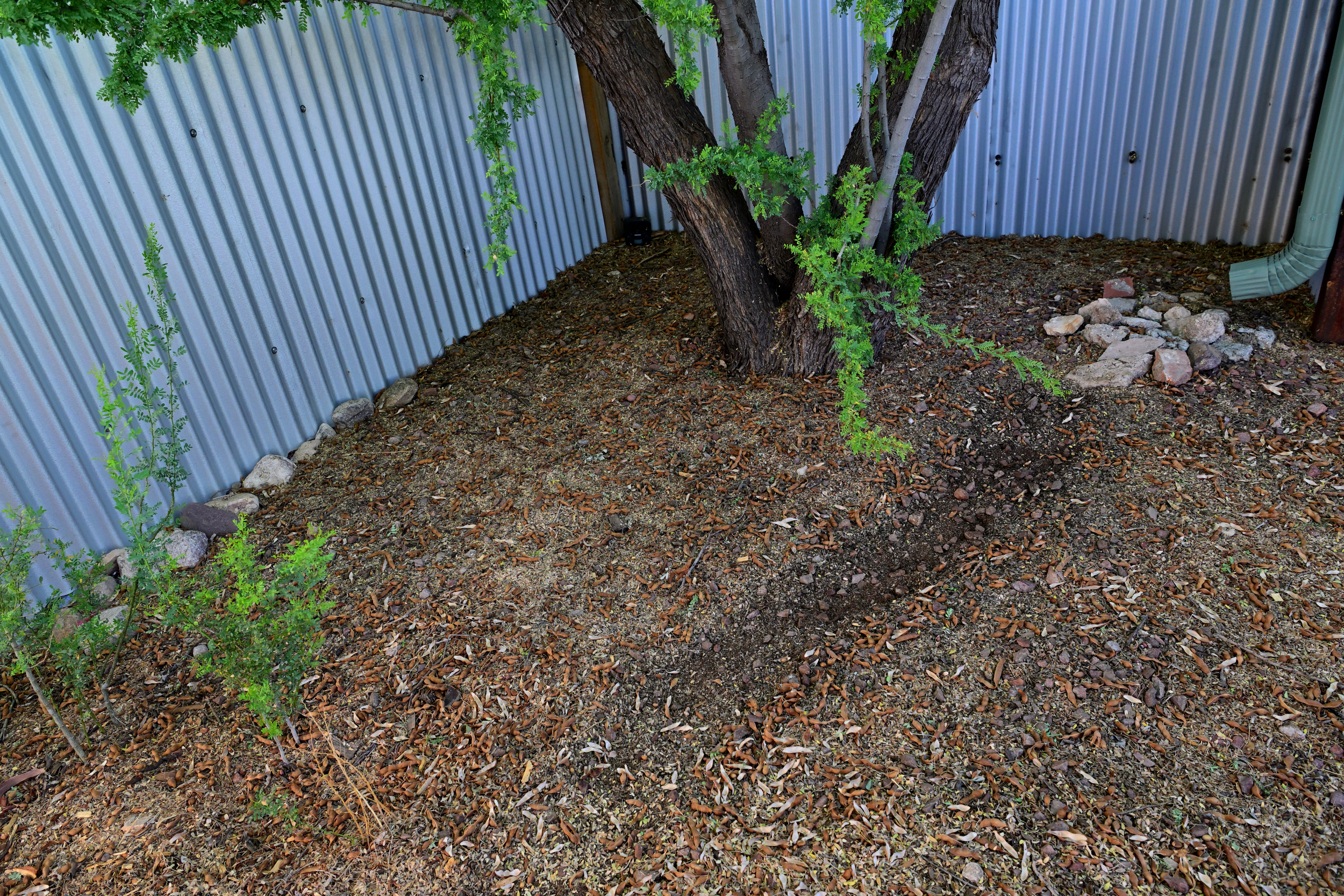
A day of record rainfall was indeed welcome in Tucson.
However, the storm revealed a problem in my landscape. One of my downspouts directed water into my yard, but it didn’t stay there. A few feet away from the downspout, that water flowed into my driveway, then off my property.
Once it’s off property, rainwater becomes stormwater, which can cause urban flooding.
So, I’m making adjustments. I’m building a path that will gently suggest a different path for rainwater coming out of this downspout.
The goal is to keep that rainwater here, where it can nourish plants as it get absorbed into the ground.
Transcript
INTRO: From Tucson, Arizona, welcome to the Water Harvesting 101 podcast. My name is Martha Retallick. I’ve been a water harvester for 20 years, and I’m looking forward to helping you get started.
Before we do that, here’s a little Tucson secret: For most of the year, we’re in drought. That’s just how life is in the desert.
But when the rains return, oh, do they ever. They often bring an unwelcome friend called flooding.
How do we reduce the risks of flooding? We do it with water harvesting.
Water harvesting encompasses three activities:
- Redirecting rainwater away from where it isn’t wanted to where it is.
- Storing rainwater for later use, for example, during a drought.
- Recycling “used” water. At my place, I don’t let laundry water go down the drain. Instead, it’s for the fruit trees.
We’ll be covering all of these topics and more, so let’s get started.
EPISODE: The good news: Last week we had rain!
As in, a huge thunderstorm rolled into town and left us with .64” of rain. That is a Tucson daily record for June 17!
This storm brings our annual rainfall total to an even three inches! That’s the good news.
The bad news: This was a huge storm.
And, like a lot of water harvesters around town, it’s time for me to make some adjustments in my landscape. During the storm, I noticed that my porch roof downspout was busy.
Not only was that downspout water flowing across the yard, it was flowing down the driveway and onto the street, where it became stormwater runoff. And runoff can cause floods.
This isn’t good. Matter of fact, it goes against everything I stand for as a rainwater harvester.
I’ve been feeling very guilty, but the facts of this situation don’t care about my feelings. Hence, it’s time to get to work.
As mentioned above, the area below the downspout slopes downhill and it’s right next to the driveway. So, I’m using my rakes to make the suggestion of a swale.
It’s a very gentle crease in the landscape, and it’s there to guide the rainwater downhill, along the driveway, and toward various plants. The goal is to keep this rainwater in the yard and off the driveway.
I got this idea from a family up the street. On a rainy day, they decided to do something about the little strip of land that’s below their retaining wall and next to the sidewalk.
They used hand tools to build a little trail that guides rainwater past their plants while it flows downhill. It’s natural irrigation that doesn’t require any human intervention – that’s the essence of passive water harvesting.
Now that I’ve built my suggestion of a swale, the next step is to wait for more rain to come along. That rain will flow in a certain path, as rain always does.
Let’s see if the rain agrees with the suggestion I have laid out for it.
Safety Tip: It’s very tempting to go out during a rainstorm, grab a shovel, and adjust your landscape, but…
Have you ever heard of that expression, when thunder roars, go indoors?
[sound of thunder]
That is excellent advice. Postpone your landscaping adventures until after the thunderstorm passes.
If you’d like to learn more about water harvesting, sign up for my monthly email newsletter. If you do, I’ll give you a free copy of my Water Harvesting Cheat Sheet.
And if you’d like to support the Water Harvesting 101 podcast, the PayPal email address is info@westernskycommunications.com.
OUTRO: Thanks for listening to this episode of the Water Harvesting 101 podcast. If you’d like to learn more about water harvesting, meet my book family.
First, it’s City Nature, the book that’s guaranteed to look great on any coffee table. City Nature reveals my secrets to water harvesting through my 20-year journey of transforming my Tucson home into an urban oasis. Get the details at CityNatureBook.com.
And if you’re on the go, take water harvesting with you. Water Harvesting 101 is an audiobook and eBook combination that will teach you the nuts and bolts of water harvesting and show you how to put them to work. Available exclusively at WaterHarvesting101Book.com.