The National Weather Service just released its 2026 Arizona Monsoon Outlook.
It calls for above average rainfall for the entire state of Arizona, especially northeastern Arizona.
El Niño is also becoming a factor, which could lead to an active hurricane season.
This episode discusses how the second activity of water harvesting, storing rainwater for later use, relates to the forecast.
Transcript
INTRO: From Tucson, Arizona, welcome to the Water Harvesting 101 podcast. My name is Martha Retallick. I’ve been a water harvester for 20 years, and I’m looking forward to helping you get started.
Before we do that, here’s a little Tucson secret: For most of the year, we’re in drought. That’s just how life is in the desert.
But when the rains return, oh, do they ever. They often bring an unwelcome friend called flooding.
How do we reduce the risks of flooding? We do it with water harvesting.
Water harvesting encompasses three activities:
- Redirecting rainwater away from where it isn’t wanted to where it is.
- Storing rainwater for later use, for example, during a drought.
- Recycling “used” water. At my place, I don’t let laundry water go down the drain. Instead, it’s for the fruit trees.
We’ll be covering all of these topics and more, so let’s get started.
EPISODE: Our friends at the National Weather Service have just released the 2026 Arizona Monsoon Outlook:
I’m going to talk about how this forecast relates to water harvesters.
First of all, the outlook. If you’re a big fan of this stuff, [sound of downpour] you are really going to like this forecast. Here’s why:
The National Weather Service is telling us that odds tilt toward above normal precipitation for the entire state of Arizona. especially northeastern Arizona.
So, Four Corners region, get ready. Here comes your rain.
And now, the bad news…
The bad news is that the National Weather Service is also predicting above average temperatures.
Then there’s El Niño. It’s a weather phenomenon associated with above average water temperatures in the eastern Pacific Ocean. That is already happening.
What does this mean for Arizona and the Southwest? It means that we could have an active hurricane season.
Most named storms do not come to us as full-fledged hurricanes. By the time they hit the American Southwest, they are usually tropical storms or tropical depressions. Either way, they can bring us a lot of rain.
And we’ve been in a drought. We could use the rain.
This summer, I’m being an optimist. I planted a summer garden, and it has been using quite a bit of my cistern water.
Last month, when I planted, I had 1,300 gallons in the tank. Now I’m down to 1,100 gallons.
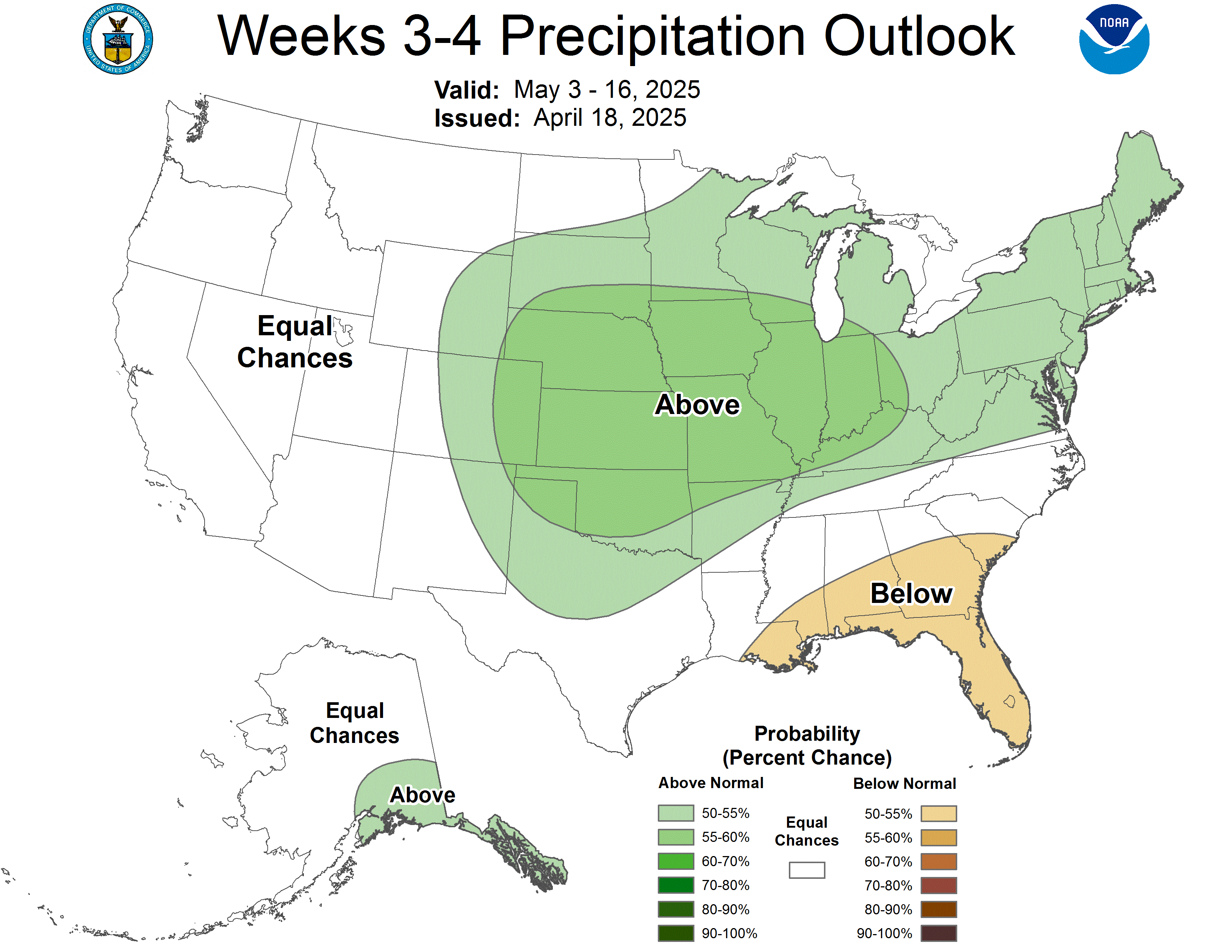
I’m not getting concerned yet, but I am keeping an eye on the forecast because the Climate Prediction Center has been saying that the second half of June could have above average rainfall.
Here’s hoping.
In the meantime, I have my gardens mulched in order to keep the water in. I also have shade cloths over two of the garden beds. They’re acting as kind of a roof to keep the toasty-toasty sun off the plants.
If you’d like to learn more about water harvesting, sign up for my monthly email newsletter. If you do, I’ll give you a free copy of my Water Harvesting Cheat Sheet.
And if you’d like to support the Water Harvesting 101 podcast, the PayPal email address is info@westernskycommunications.com.
OUTRO: Thanks for listening to this episode of the Water Harvesting 101 podcast. If you’d like to learn more about water harvesting, meet my book family.
First, it’s City Nature, the book that’s guaranteed to look great on any coffee table. City Nature reveals my secrets to water harvesting through my 20-year journey of transforming my Tucson home into an urban oasis. Get the details at CityNatureBook.com.
And if you’re on the go, take water harvesting with you. Water Harvesting 101 is an audiobook and eBook combination that will teach you the nuts and bolts of water harvesting and show you how to put them to work. Available exclusively at WaterHarvesting101Book.com.